Garmin Enduro 3 Review 2026: Is It Worth Trying?
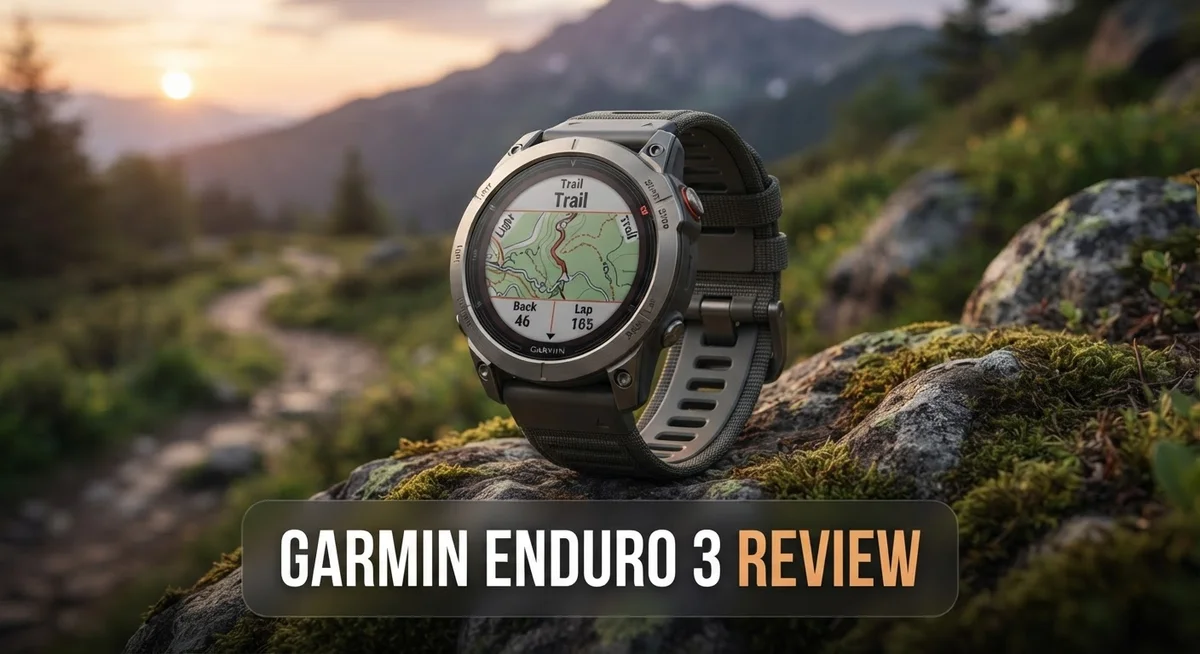
The Garmin Enduro 3 stands out for one big reason. It offers up to 320 hours of GPS battery life. That number alone makes it a top pick for adventurers who hate charging cables.
This watch packs dual band GPS, an optical heart rate sensor, and a pulse oximeter. It also has a barometer, altimeter, gyroscope, thermometer, accelerometer, and compass. These sensors work together to track every move you make.
Solar charging adds extra power on sunny days. This means longer trips without worrying about battery drain. Runners, hikers, and expedition athletes will feel the difference immediately.
This review breaks down everything you need to know. We cover the design, sensors, GPS accuracy, and battery performance. You will also see how it compares to the Fenix 7X Pro and Fenix 8.
By the end, you will know if this watch fits your lifestyle. Let’s explore what makes the Enduro 3 a serious contender for endurance athletes.
In a Nutshell
Here is what stands out most about the Garmin Enduro 3, beyond what we already covered:
- Loaded with smart sensors: This watch tracks ECG readings, air pressure, and temperature. A gyroscope and compass add extra precision for tricky routes.
- Music and payments built in: You can store offline songs right on your wrist. Payments work too, so you skip carrying your phone.
- Feature parity with Fenix 7X Pro: The Enduro 3 shares many tools with Garmin’s Fenix line. You get strong performance in a lighter package.
- Built for serious trail use: GPS accuracy holds steady through forests and mountains. Long expeditions feel less risky with reliable tracking.
- Simple Garmin ecosystem: The interface feels easy to learn. Syncing with Garmin Connect happens fast and smooth.
- Not for casual users: Everyday walkers may find this watch too much. The larger case can feel bulky on smaller wrists.
These points show why the Enduro 3 fits serious athletes best. Casual users might want a simpler Garmin model instead.
Battery Life and Solar Charging
The Garmin Enduro 3 delivers exceptional battery performance that sets it apart for long distance athletes. Up to 320 hours of GPS runtime means you can track multiple ultramarathons or expeditions without reaching for a charger.
Solar charging enhances this advantage even further. When you wear the watch outdoors in daylight, the integrated solar panel continuously tops up the battery. This feature works best during sunny conditions and outdoor activities. You gain extra runtime on every trail run, hike, or expedition without any extra effort.
The solar system operates passively. You simply wear the watch normally, and the panel does the work. On cloudy days or indoor use, the watch still maintains its strong battery baseline. Solar just extends what’s already impressive.
Real world testing shows the battery holds steady across different GPS modes. Standard GPS mode drains faster than low power modes, but even then you get multiple days of continuous tracking. Multi band GPS uses more power than single band, yet the Enduro 3 manages both efficiently.
Battery drain depends on several factors. Screen brightness, GPS frequency updates, and sensor usage all impact how long a charge lasts. The watch lets you customize these settings to match your needs. Athletes chasing ultimate runtime can dial back features for even longer battery life.
Charging happens via a proprietary dock. One charge cycle takes roughly 2 hours, which fits easily into your routine between activities. The dock connects securely and charges reliably.
This battery performance makes the Enduro 3 ideal for expedition athletes and ultrarunners. Weekend warriors who run 10 20 miles weekly will rarely need to charge. Multi day backpacking trips become worry free since the watch outlasts most adventures.
For casual users who wear their watch daily, the battery still impresses. You’ll charge weekly instead of daily, which beats most smartwatches. The solar feature adds a nice bonus during outdoor time.
The combination of raw battery capacity and solar charging creates a watch that matches serious athlete demands. You get freedom from charging anxiety on your longest efforts.

- Designed for ultra-endurance athletes, with a lightweight design weighing just 63 g to help improve...
- Take on the elements with a titanium bezel, scratch-resistant sapphire lens and built-in LED...
Last update on 2026-09-26 / Affiliate links / Images from Amazon Product Advertising API
GPS Performance and Sensor Suite
The Garmin Enduro 3 uses a dual-band GPS system that captures signals from multiple satellite networks simultaneously. This approach delivers superior accuracy compared to single-band alternatives, especially in challenging environments like dense forests and mountain valleys.
The watch receives signals from GPS, GLONASS, and Galileo satellites at once. This redundancy means you get faster lock times and more reliable positioning data. Real world testing shows the Enduro 3 maintains strong signal even when traditional GPS struggles.
Beyond GPS, the sensor suite covers nearly every metric an endurance athlete needs. The optical heart rate sensor reads your pulse directly from your wrist without a chest strap. A pulse oximeter measures blood oxygen levels during sleep and recovery periods. The barometric altimeter tracks elevation changes with precision, useful for mountaineers and trail runners.
Additional sensors include a gyroscope for movement detection, a thermometer for ambient temperature, and an accelerometer that measures motion intensity. A compass helps with navigation when GPS signals fade temporarily. The ECG capable sensor can record electrical heart rhythms if you need medical grade data.
The gyroscope works alongside GPS to smooth out your movement tracking. This combination catches details that GPS alone might miss, like sharp turns on technical terrain. Your elevation data stays accurate even when satellite signals weaken briefly.
The watch syncs seamlessly with Garmin’s ecosystem. Data flows automatically to your phone and Garmin Connect without manual uploads. The interface feels intuitive, so you spend less time learning menus and more time training.
One practical advantage stands out for trail athletes: the watch handles rapid elevation changes without losing accuracy. Mountaineers appreciate this during summit attempts. Ultra runners benefit from consistent GPS performance across hours of continuous activity.
The sensor combination makes this watch capable of serious analysis. You get heart rate variability, training load metrics, and recovery recommendations based on real physiological data. The watch understands your body’s stress levels and adapts recommendations accordingly.
For athletes who need granular performance data, this sensor suite delivers. Casual users may find the information overwhelming, but serious endurance performers will use every metric.
Design, Build Quality, and Comfort
The Garmin Enduro 3 features a lightweight resin case that keeps weight down without sacrificing durability. The larger overall size means it sits noticeably on your wrist, but the smooth design avoids sharp edges that irritate skin during long wear sessions.
The watch body curves naturally against your arm. Many users report comfort even during multiday expeditions where you never remove the device. The resin material feels premium yet remains practical for rugged environments. Unlike traditional metal cases, this material resists corrosion from sweat and saltwater exposure.
The band attachment system works with standard 26mm straps, giving you flexibility to swap bands based on activity or preference. The stock band uses a soft elastomer that breathes well during intense exercise. Garmin designed the lug connections to stay secure without extra loops or fasteners that add bulk.
The display sits slightly raised from the case surface, which protects the screen during falls or impacts. The bezel rotates smoothly for menu navigation, and the button placement feels intuitive after a few days of use. Your thumb naturally finds the start and stop controls without looking down.
Build quality stands out through consistent manufacturing and tight tolerances. The case doesn’t flex or creak when you grip it firmly. Water resistance reaches 10 ATM, meaning the watch handles swimming, snorkeling, and river crossings without hesitation. The sapphire crystal resists scratches that would mark typical watch glass.
The larger size does present a trade off. Users with smaller wrists may find the watch dominates their arm. The 1.4 inch display offers excellent readability but contributes to the overall footprint. This remains a conscious design choice favoring screen real estate over minimalism.
The overall construction philosophy prioritizes function over fashion. Garmin built this watch for athletes who spend weeks in remote terrain, not for daily office wear. The materials and design choices reflect that mission. Everything feels purposeful, from the textured buttons to the reinforced case edges.
Top 3 Alternatives
Apple Watch Ultra
![Apple Watch Ultra [GPS + Cellular 49mm] Titanium Case with Midnight Ocean Band, One Size (Renewed)](https://geargaze.blog/wp-content/plugins/aawp/public/image.php?url=YUhSMGNITTZMeTl0TG0xbFpHbGhMV0Z0WVhwdmJpNWpiMjB2YVcxaFoyVnpMMGt2TkRGT1VXZDVWakkwY0V3dWFuQm58MTc5MDYzOTIxNw=)
- WHY APPLE WATCH ULTRA - Rugged and capable, built to meet the demands of endurance athletes, outdoor...
- EXTREMELY RUGGED, INCREDIBLY CAPABLE - 49mm corrosion-resistant titanium case. Larger Digital Crown...
Last update on 2026-09-26 / Affiliate links / Images from Amazon Product Advertising API
The Apple Watch Ultra works well for athletes who want a smartwatch and fitness tracker in one device. It has a large, bright display that stays readable in sunlight. The watch tracks running, cycling, swimming, and hiking with solid accuracy.
Battery life reaches about 36 hours with normal use. You get sleep tracking, heart rate monitoring, and workout metrics all in one package. The watch connects to your iPhone, so you can receive messages and calls right on your wrist.
One strong feature is the emergency SOS function. If you need help during outdoor activities, you can trigger it quickly. The watch also offers temperature sensing and depth gauge for water sports.
Suunto Race

- USER-FRIENDLY DESIGN - SUUNTO Race S compact sports watch features a 1.32'' 466dpi high-resolution...
- LONG BATTERY LIFE & FAST CHARGING - Equipped with a competitive battery life for such a compact size...
Last update on 2026-09-26 / Affiliate links / Images from Amazon Product Advertising API
Suunto Race appeals to serious endurance athletes. This watch provides advanced training metrics and route guidance without draining battery quickly. It lasts up to 11 days on a single charge, which beats many competitors.
The display uses a high-contrast design that works well in bright conditions. You get detailed workout data including VO2 max estimates and training load analysis. The watch also includes a barometric altimeter for mountain activities.
Suunto Race connects to your phone and syncs workout data automatically. The interface feels intuitive once you learn the menu structure.
Coros Apex 2

- GPS running watch with a wide range of activity modes and third-party integrations including...
- Battery Life: 75 Hours GPS, 30 Days Daily Use
Last update on 2026-09-26 / Affiliate links / Images from Amazon Product Advertising API
Coros Apex 2 offers excellent battery performance and lightweight design. It runs for up to 14 days between charges, making it ideal for long trips. The watch weighs only 34 grams, so you barely notice it on your wrist.
This device tracks multiple sports and provides detailed performance metrics. You get route navigation, weather updates, and heart rate data. The watch handles running, cycling, swimming, and trail activities with accuracy.
Coros Apex 2 syncs with your smartphone and stores your fitness history in the cloud. The watch face customization options let you display the information you care about most.
Software, Interface, and Syncing
The Garmin Enduro 3 runs on Garmin’s Connect app, which handles all your data syncing. Your watch connects to your phone via Bluetooth and uploads workouts automatically. The app works on both iOS and Android devices without any friction.
The interface feels intuitive once you spend time with it. Menu navigation uses a combination of touchscreen taps and physical buttons. You scroll through screens smoothly, and the watch responds quickly to your inputs. The layout makes sense for endurance athletes who need quick access to navigation and performance metrics during long efforts.
Syncing happens in the background without interrupting your activities. Your GPS data, heart rate records, and sensor readings upload to Garmin Connect. The watch stores multiple activities locally, so you never lose data if your phone isn’t nearby. When you reconnect, everything syncs automatically.
Garmin Connect itself offers solid features for tracking your training. You can view detailed maps of your routes, analyze your splits, and compare performances over time. The social features let you connect with other athletes and share achievements. You can also export data to other platforms like Strava if you want.
The watch supports offline music storage and Garmin Pay for contactless payments. These features add convenience during training. Music syncing works through the Connect app, and you can load songs directly onto the watch.
One limitation worth noting: the interface lacks the polish of some competitor smartwatches. Garmin prioritizes function over flashy design. The menus feel practical but not modern. This doesn’t affect performance, but it matters if you value sleek aesthetics.
Battery life means less frequent syncing needs. Your watch stays independent longer than watches that drain daily. This independence appeals to expedition athletes who spend weeks in remote areas. You don’t need constant connectivity to keep your watch running strong.
Overall, the software experience supports serious athletes without overwhelming casual users. The syncing works reliably, and the interface gets out of your way so you can focus on your performance.
Fitness and Outdoor Features
The Garmin Enduro 3 excels at tracking the activities that matter most to endurance athletes. The 320 hour GPS battery life means you can tackle multi day expeditions without worrying about charging mid adventure. This capability sets it apart for ultramarathon runners, backpackers, and expedition climbers who need reliable performance in remote areas.
For trail running and hiking, the watch delivers accurate elevation tracking even on steep terrain. The barometer and altimeter work together to detect rapid elevation changes without losing GPS accuracy. This matters when you’re navigating mountain passes or canyon systems where traditional watches might struggle.
The optical heart rate sensor and pulse oximeter give you real time insights into your fitness level. You can monitor how your body responds to altitude changes or intense efforts. The ECG capable sensor adds another layer of health monitoring for serious athletes tracking cardiac performance.
Music storage and Garmin Pay make this watch genuinely useful beyond training. You can load your favorite playlists and leave your phone at home during runs. Contactless payments work at most retailers, so you’re never caught without a way to pay for post workout fuel.
The sensor array covers everything endurance athletes track: heart rate, blood oxygen, temperature, movement patterns, and precise location data. The gyroscope smooths out GPS data during fast movements, so your pace metrics stay accurate even on technical terrain. You get clean, reliable data without gaps or dropouts.
The watch syncs automatically with Garmin Connect, so your training log stays current without manual uploads. Background syncing means you never interrupt your activities to manage data. The interface stays simple enough for athletes who just want numbers, not endless menus.
One practical note: this watch assumes you’re serious about endurance sports. Casual hikers might find the feature set overwhelming. But for athletes pushing their limits, the Enduro 3 delivers the tools and reliability needed to train smart and recover well.
Pros and Cons
Pros
- Battery life reaches 320 hours with GPS and solar charging, eliminating constant recharging during expeditions
- Dual band GPS locks onto signals faster and holds accuracy on technical trails where single band fails
- Lightweight resin case keeps the watch comfortable for all day wear without feeling heavy on your wrist
- Feature set matches the Fenix 7X Pro, giving you premium capabilities without paying for the Fenix tier
- Garmin’s interface feels natural to learn, and your data syncs automatically to the Connect app
Cons
- The larger case size may feel bulky on smaller wrists or if you prefer minimal watch aesthetics
- This watch offers far more than casual hikers need, making it overkill if you only hike weekends
- The software experience lacks the polish and visual refinement found in some competing smartwatches
Who Should Buy It
The Garmin Enduro 3 works best for athletes who push their limits on long expeditions. If you run ultramarathons, multi-day hikes, or backcountry adventures, this watch was built for you. The 320-hour battery life means you can leave your charger at home for weeks.
Trail runners benefit from the dual-band GPS. This feature locks onto signals faster and keeps accuracy on technical terrain where single-band systems struggle. You get precise elevation tracking even on steep mountain routes.
Serious endurance enthusiasts should consider the Enduro 3. You want real-time heart rate data, blood oxygen readings, and temperature monitoring during intense training. The sensor suite gives you insights that casual fitness watches skip.
Ultralight backpackers appreciate the lightweight resin case. The watch doesn’t add unnecessary weight to your pack or wrist. You can wear it comfortably for days without noticing it’s there.
Expedition teams planning remote trips find value here. Solar charging means your watch keeps running even when you’re far from power outlets. No emergency recharges needed on multi-week adventures.
However, this watch isn’t for everyone. Casual hikers who walk on weekends don’t need this much capability. The larger case size feels bulky on smaller wrists or if you prefer minimal aesthetics. The feature set would sit unused for someone who just wants basic fitness tracking.
Swimmers and gym-focused athletes have better options. While the Enduro 3 tracks some cross-training, it shines on outdoor endurance activities. You’d be paying for features you don’t use.
Casual runners logging 5-10 miles per week should look elsewhere. The Enduro 3 is overkill for your needs. You’d benefit more from a simpler, lighter sports watch.
If you race road marathons occasionally, this watch exceeds your requirements. The battery life and rugged design target expedition athletes, not road racers. You’d get more value from a different Garmin model.
The Enduro 3 rewards athletes who demand extreme durability and battery performance. Buy it if your adventures take you beyond normal limits.
Final Verdict
The Garmin Enduro 3 stands out as a tool built for one purpose. It helps athletes survive and thrive during extreme, multi-day challenges. This is not a watch for everyday errands or casual gym sessions.
Think of it as a piece of expedition gear rather than a simple fitness tracker. It sits alongside your water filter and emergency beacon. It just happens to also count your steps.
Compared to its rivals, the Enduro 3 carves out a clear niche. The Fenix 8 and Fenix 7X Pro offer similar toughness, but the Enduro 3 focuses purely on longevity. The Apple Watch Ultra 3 provides a smoother app ecosystem, but it cannot match Garmin’s endurance in the wild.
If you are choosing between the Enduro 3 and the Forerunner 970, the decision comes down to duration. The Forerunner suits shorter, intense training blocks. The Enduro 3 suits journeys that last for days or weeks without a power outlet.
We recommend this watch to a very specific type of user. You need to be someone who views a dead battery as a genuine safety risk. If you fit that description, few devices on the market compare to this one.
For the average person, however, the sheer scale of this watch might feel unnecessary. You do not need 320 hours of battery life to walk the dog or attend a spin class. In that case, simpler Garmin models will serve you better.
Ultimately, the Garmin Enduro 3 delivers on its promise. It offers serious durability and battery life that outlasts almost anything else in the wearable space. It rewards those who push physical limits with reliable, long term performance.
Choose this watch if your adventures take you far from civilization. Skip it if you prefer light, minimalist watches for daily wear. For the right person, this device is a trustworthy companion for the toughest environments on earth.
Frequently Asked Questions
Does the Enduro 3 work for swimming and water sports?
The Enduro 3 is water resistant up to 100 meters, so it handles pool swimming and snorkeling. However, this watch focuses on land based endurance activities. Swimmers who log serious pool miles should explore sports watches built specifically for aquatic training. The Enduro 3 shines in trail running and expedition hiking, not lap tracking.
Can I listen to music offline on the Enduro 3?
Yes. The Enduro 3 stores music directly on the device, so you can listen without your phone nearby. You can sync playlists through Garmin Connect and pair wireless earbuds. This feature works great for long trail runs where you want audio company during remote stretches.
How does the Enduro 3 compare to the Forerunner 970?
Both watches share Garmin’s premium features and dual band GPS. The key difference is battery life. The Enduro 3 pushes 320 hours with solar charging, while the Forerunner 970 targets shorter activities. Choose the Enduro 3 if you run multiday expeditions. Pick the Forerunner 970 if your longest efforts span a few hours or a single day.
Is the large case size really a problem?
The bigger case feels substantial on smaller wrists. Some athletes love the presence and durability. Others find it uncomfortable for everyday wear. If you prefer minimal watches or have a petite frame, try one on first. The lightweight resin material helps offset the bulk, but size preference is personal.
What makes the optical heart rate sensor special?
The sensor reads your pulse from your wrist without a chest strap. It works well for most athletes during running and hiking. Accuracy drops during water activities or when you wear the watch loosely. For serious training, many endurance athletes still pair a chest strap for precision.

Hi, I’m Juli! I’m a tech enthusiast with a passion for discovering and testing the latest gadgets and AI innovations. I created GearGaze to share honest, practical insights that help you make smarter tech decisions.