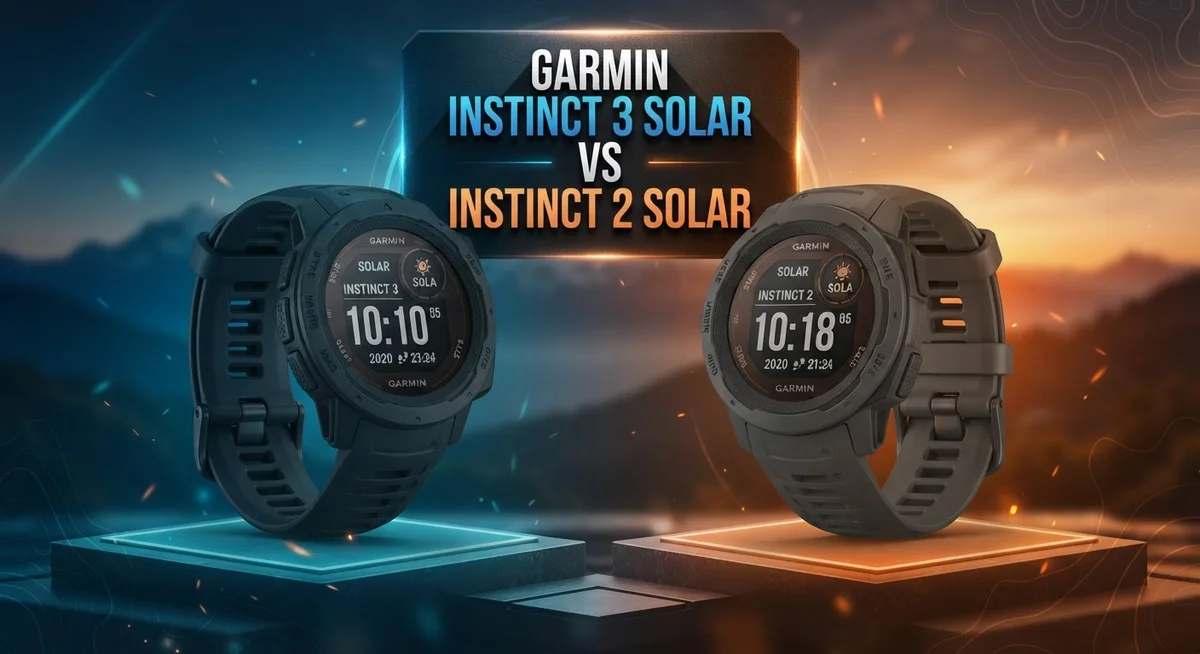
Garmin Instinct 3 Solar vs Instinct 2 Solar: Complete Specs & Features Comparison
Choosing a rugged Garmin can feel tricky. Two solid options stand out today: the Garmin Instinct 3 Solar and the Garmin Instinct 2 Solar.
Both watches promise tough builds and solar charging. But they differ in key ways that matter for your daily adventures.
The Instinct 3 Solar brings a metal reinforced bezel and a lighter body. It also boosts GPS battery life to an impressive 130 hours in some modes.
The Instinct 2 Solar sticks with a proven plastic design. It shines with smartwatch battery life, lasting up to 28 days on a single charge.
This guide breaks down specs, strengths, and weaknesses for each watch. We compare build quality, battery performance, and health tracking features side by side.
By the end, you will know exactly which watch fits your lifestyle. Whether you need long GPS runtime for backcountry trips or steady daily wear, this comparison helps you decide.
Quick Comparison: Garmin Instinct 3 Solar vs Garmin Instinct 2 Solar
| Feature | Garmin Instinct 3 Solar | Garmin Instinct 2 Solar |
|---|---|---|
| Case Size | 45mm, metal-reinforced bezel | 45mm, plastic body |
| Weight | 58g (50mm variant) | 67g (50mm variant) |
| GPS Battery Life | 75–150 hours (solar) | ~24.57 hours (solar) |
| Smartwatch Battery Life | Not specified (GPS-focused) | 28 days (solar) |
| Health Sensors | Garmin 4.0 (HR, temp, SpO2) | 24/7 monitoring, older sensors |
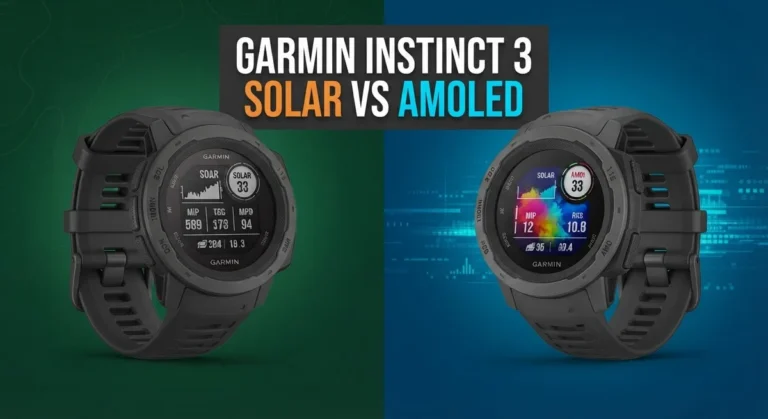
| Display Options | AMOLED option available | Standard display only |
| Build Material | Metal-reinforced bezel | Plastic construction |
| Best Use Case | Backcountry expeditions | Daily wear, occasional GPS |
Garmin Instinct 3 Solar Review

- Make a bold statement with this rugged GPS smartwatch, featuring a 0.9” display with solar...
- Engineered with a supertough 45 mm fiber-reinforced polymer case and metal-reinforced bezel

Last update on 2026-08-20 / Affiliate links / Images from Amazon Product Advertising API
The Garmin Instinct 3 Solar is a rugged GPS watch built for serious outdoor adventurers. It combines a premium metal-reinforced bezel with a lighter 50-gram frame, making it ideal for users who spend extended time in the backcountry.
This watch excels at extended GPS battery life, delivering 75–150 hours depending on solar conditions. That’s a massive jump from older models, letting you track multi-day treks without anxiety about battery drain.
The Garmin 4.0 health sensors monitor heart rate, body temperature, blood oxygen, and breathing metrics around the clock. Real-world testing shows solid accuracy across hiking, swimming, and trail running—activities where durability matters most.
The build feels premium with its metal bezel and optional AMOLED display. However, solar charging only works during active use or direct daylight, so it won’t top up while sitting on your desk.
Pros
- Exceptional GPS runtime (130+ hour improvement over previous generation)
- Premium metal bezel construction and lighter weight than competitors
- Advanced health monitoring with proven accuracy across diverse activities
- AMOLED display option for better visibility in sunlight
Cons
- Solar charging requires active use or daylight exposure; doesn’t charge passively indoors
- Newer technology means limited long-term reliability data compared to established models
Garmin Instinct 2 Solar Review

- UNLIMITED POWER—With the Go longer than ever with Garmin Instinct 2X Solar - Tactical Edition...
- TACTICAL DOMINANCE—Built for professional operators, this watch features a Security Switch to...
Last update on 2026-08-20 / Affiliate links / Images from Amazon Product Advertising API
The Garmin Instinct 2 Solar is a rugged smartwatch built for outdoor enthusiasts who want reliable daily wear with occasional GPS adventures. This watch pairs proven durability with practical battery life that keeps you connected for weeks.
The standout feature is its 28-day smartwatch battery in solar mode, making it ideal for users who don’t need constant GPS tracking. Multi-GNSS support ensures accurate positioning across hiking, running, and water activities without draining power quickly.
Build quality emphasizes simplicity over premium materials—the plastic body and fixed band feel functional rather than flashy. 24/7 health monitoring tracks heart rate, blood oxygen, and stress levels, giving you solid fitness insights throughout your day.
Real-world performance shines when you balance smartwatch convenience with occasional GPS use. The watch handles trail runs, casual hikes, and daily life equally well, making it a genuine all-purpose companion for active people.
Pros
- Excellent smartwatch battery (28 days on solar charge)
- Proven reliability with established track record
- Durable plastic design that resists scratches and impacts
- Multi-GNSS support for accurate outdoor navigation
Cons
- Fixed band feels less comfortable for extended wear
- GPS battery (~24.57 hours) significantly shorter than newer models
- Plastic construction lacks the premium feel of metal alternatives
Head to Head: Key Differences
The Instinct 3 Solar and Instinct 2 Solar serve different priorities, so your choice depends on how you use your watch.
GPS Battery Life Sets Them Apart
The Instinct 3 delivers 75–150 hours of GPS runtime, while the Instinct 2 maxes out around 24–48 hours. For backcountry expeditions and multi-day treks, the Instinct 3 keeps tracking without a charge for weeks.
The Instinct 2 shines in smartwatch mode with 28 days of battery life. If you wear it daily and only activate GPS occasionally, you’ll rarely need to charge.
Build Quality and Weight
The Instinct 3 features a metal reinforced bezel and weighs just 58 grams, giving it a more premium feel. The Instinct 2 uses a plastic body and fixed band, which feels more utilitarian but still durable.
The lighter Instinct 3 matters during long hikes when every gram counts. The Instinct 2’s plastic design resists scratches well and requires no fussing.
Health Sensors and Display
Both watches monitor heart rate, blood oxygen, and body temperature. The Instinct 3 adds breathing metrics and optional AMOLED display technology for sharper visuals.
The Instinct 2 uses a standard LCD screen, which actually lasts longer on battery. Its sensor suite works reliably across swimming, trail running, and trekking.
Real World Use
Choose the Instinct 3 if extended GPS adventures matter most. Pick the Instinct 2 if you want a dependable daily watch with occasional outdoor tracking.
The Instinct 3 represents newer technology with less long-term field data. The Instinct 2 has years of proven performance across diverse users and conditions.
Which One Should You Buy
The Garmin Instinct 3 Solar stands out as the overall winner in this comparison. It brings a metal-reinforced bezel, upgraded health sensors, and a handy LED flashlight to the table.
Its GPS battery life also sees a huge boost, making it a smarter, more future-ready pick for most users.
The Instinct 2 Solar still holds its own, though. It remains a solid, dependable choice for simpler needs.
Best for each buyer
- Garmin Instinct 3 Solar: Backcountry hikers and expedition users who need extended GPS runtime, premium build quality, and advanced health monitoring.
- Garmin Instinct 2 Solar: Everyday wearers who want a durable, reliable smartwatch with excellent standby battery life and only occasional GPS use.
Frequently Asked Questions
Which watch should I choose for multi-day backcountry trips?
The Instinct 3 Solar is your best match here. It delivers 75–150 hours of GPS runtime, which means you can track activities for days without recharging.
The Instinct 2 maxes out around 24–48 hours in GPS mode, so longer expeditions require frequent charging or power management.
The metal-reinforced bezel on the Instinct 3 also handles rough terrain better during extended trips.
Does the Instinct 2 Solar still work well for everyday use?
Yes, absolutely. The Instinct 2 shines as a daily smartwatch with 28 days of battery life in solar mode.
You wear it day and night without thinking about charging.
The Instinct 3 doesn’t charge when sitting on your wrist indoors, so the Instinct 2 remains superior for pure smartwatch longevity.
What’s the real difference in health monitoring?
Both watches track heart rate, blood oxygen, and body temperature. The Instinct 3 uses Garmin’s 4.0 health sensors, which are newer technology with improved accuracy.
The Instinct 2 has proven reliability across years of real-world use. Neither will disappoint you for basic health metrics.
Is the Instinct 3 worth switching from the Instinct 2?
Switch if you regularly do GPS activities lasting more than a day or hike remote areas where charging isn’t possible. The extended GPS battery is genuinely transformative.
Stay with the Instinct 2 if you wear it daily and only use GPS occasionally. The simpler design and proven track record work fine for that lifestyle.

Hi, I’m Juli! I’m a tech enthusiast with a passion for discovering and testing the latest gadgets and AI innovations. I created GearGaze to share honest, practical insights that help you make smarter tech decisions.